
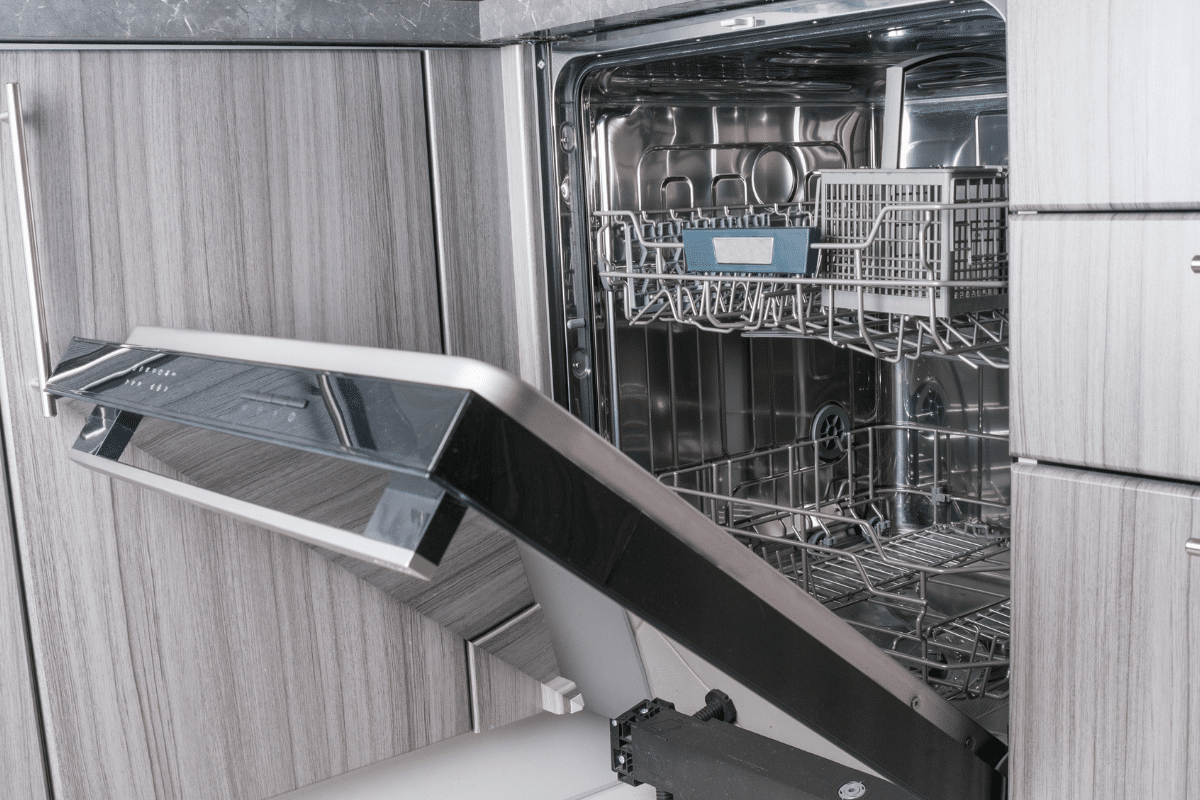
When your dishwasher not filling with water leaves you with a sink full of dirty dishes, it can be frustrating. There are several possible causes to consider, and while some are simple maintenance checks, others will require professional attention.
Our experts put together this guide to help you understand the most common reasons why your dishwasher may not be filling and what each issue typically means.
Top Causes of a Dishwasher Not Filling with Water
If your dishwasher isn’t filling at the start of a cycle, here are some of the likely culprits:
1. Clogged Water Inlet Valve
The water inlet valve controls the flow of water into the dishwasher. Over time, minerals from hard water or small bits of debris can build up around the valve, resulting in the repair complaint, “dishwasher not filling with water.” When this happens, the dishwasher may sound like it is running, but no water enters the tub.
In some cases, clearing visible buildup around the valve can improve performance. However, if the valve is blocked internally or has failed electrically, it will not allow water to pass through. Because this component is located near electrical connections and plumbing, repair or replacement is a task best handled by a professional technician.
2. Stuck Float and Float Switch
The float inside your dishwasher acts as a water level sensor. Its job is to rise with the water level during a cycle and signal the dishwasher to stop filling once it has enough. If the float gets stuck in the “up” position, the dishwasher may mistakenly believe it is already full and prevent water from entering.
You might notice this problem if the dishwasher makes some noise at the start of the cycle but never fills with water. Often, the float can become obstructed by food particles or mineral buildup. The float switch that communicates with the control board can also fail over time. If the float moves freely but the dishwasher still does not fill, the switch itself may need to be tested and replaced by a technician.
3. Blocked or Kinked Water Supply Line
Your dishwasher relies on a steady water supply from the line that connects it to the shut-off valve under the sink. If that line becomes bent, kinked, or clogged with sediment, water may not be able to reach the dishwasher, causing the dishwasher not filling with water problem.
In many cases, homeowners discover this issue when their dishwasher suddenly stops filling even though everything else seems to be working correctly. If the line is kinked, straightening it may help. However, if debris is inside the line or valve, it may require flushing or replacement. Because the supply line is pressurized, and because leaks can cause water damage, it is often safest to have a professional evaluate and fix the problem.
4. Faulty Door Latch
For safety reasons, dishwashers are designed not to run unless the door is fully closed and latched. If the latch is loose, damaged, or misaligned, the dishwasher may not recognize that the door is shut. As a result, it will not allow water to fill at the beginning of a cycle.
You might notice that the door does not “click” securely when closed or that it feels loose compared to normal. Even if the dishwasher powers on, a faulty latch can cause the dishwasher not filling with water symptom. While adjusting or replacing a latch might seem straightforward, it often requires proper alignment and specific replacement parts. Calling a professional ensures the latch is installed correctly so the dishwasher operates safely.

5. Control Board or Timer Malfunctions
If all of the visible components appear to be working correctly, the issue may lie with the dishwasher’s control system. The electronic control board or mechanical timer tells the dishwasher when to open the inlet valve and begin filling. When these components fail, the signal to start the fill cycle may never be sent.
Control issues can be tricky to spot. Sometimes the dishwasher may run a partial cycle but skip the filling stage altogether. Other times, the machine may appear to be dead or unresponsive. Since diagnosing electronic failures requires specialized tools, these repairs are best left to trained technicians who can safely test and replace faulty components.
When to Call for Professional Help
Some surface-level checks can be done at home, such as ensuring the float is not obstructed or the water supply line is not kinked. However, most problems that prevent a dishwasher from filling involve parts that require specialized knowledge, tools, and safety precautions.
If your dishwasher makes noise but does not fill, repeatedly shows signs of hard water buildup, or fails to take in water despite the supply line being clear, it is time to schedule service with a qualified repair technician.
At Same Day Appliance Repair, our Salem appliance repair specialists can quickly diagnose the cause of the problem, replace any failed parts, and restore your dishwasher’s performance so you can get back to a smoothly running kitchen.
